
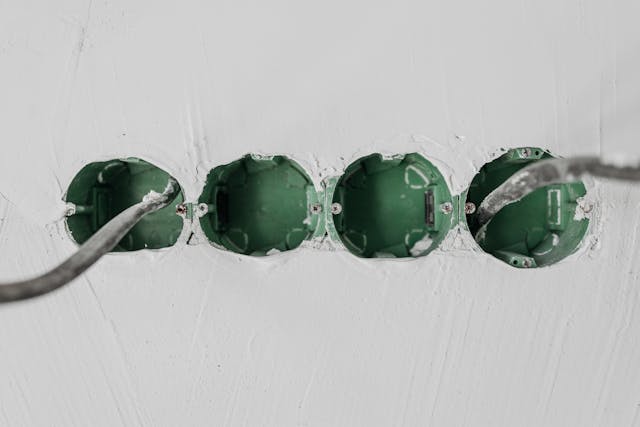
Every now and then, a customer, or a neighbor, a friend, will ask me the same question:“You do a lot of work for yourself. Can you run some new branch circuits or install this ceiling fan, or other work related to the distribution, transmission, and consumption of electrons for doing work? I’ll even pull the permit and get it inspected. And pay you a nominal fee.
The short answer to this question is no. The longer answer is noooooo.
It’s Not About Whether I Can Do the Work
If you own your own house or property in Pennsylvania and you want to do some electrical (or plumbing, or building work) in your OWN HOUSE to fix something, install something, etc. etc., the state and most municipalities (CAVEAT: Do Your Own Fact Verification On This) will let you — as long as you get the proper permits for the work and have the work duly inspected and approved by your municipality zoning officer an/or building inspector(s). That’s what they generally call a homeowner exemption. That means you and your grubby little fingers doing all the work yourself. If you know what you’re doing and are comfortable doing it, I’m all for maximal self-sufficiency.
But the minute I were to pick up tools and start doing electrical work on someone else’s property, the rules change and not in my or anyone else’s favor. At that point, under Pennsylvania’s laws and likely all individual municipalities in said commonwealth, I’m considered a contractor. And for electrical work, that means you need to be a licensed electrician (and, for most home improvement work, a registered home improvement contractor with the proper liability insurance and/or bonding).
I am not a licensed electrician. Nor do I have any intention of becoming one at this point. Licensed electricians are professionals. They know the business end of a conductor from the hole it gets shoved into. Licensed electricians have had a lot of training to get said license. Licensed electricians carry liability insurance and bonding. I enjoy learning about electrical work. I enjoy learning about plumbing. I enjoy learning new trades. That’s precisely why I respect them enough not to represent myself as something I’m not.
Just pulling a building permit doesn’t magically make it okay for you to invite Uncle Joe (or me) who’s building your dining room table or dining room buffet or closet cabinetry, or what have you, into your house to monkey around with the circuitry. Unless of course Uncle Joe is a licensed electrician. Building permits and inspections and being a licensed electrician are separate requirements. You need, and want both when work is being done on your property that requires building permits and inspections and licensed tradespeople who know what they are doing.
If it’s your home and you want to do the work personally, get the proper permits and inspections, and go nuts (according to the rules and regulations of your state or commonwealth and local municipality, and in accordance with your own abilities, of course).
My Wheelhouse Is Wood, Not Wires
MP Woodworks builds furniture, cabinetry, and all manner of wooden objects designed to last generations. I’m happy to work alongside your licensed electrician and/or contractor if a project needs both of us on-site — say, to coordinate receptacle or lighting placements inside a custom built-in or piece of cabinetry. But I won’t cross the line into their trade because:
- I respect the work, skill, and expertise of highly trained tradespeople.
- It’s not legal without the license.
- It’s not insured without the license.
- I’d rather spend my time making things out of wood than explaining myself to the Pennsylvania Attorney General’s Office, your insurance carrier, your attorney-at-law, and my wife’s attorney-at-law when they all try to sue me into oblivion for being a helpful but misguided soul.
So if you need electrical work done, call a licensed electrician. If you need something beautiful, functional, and made of dead trees, as Blondie says, “Call Me!.” We’ll both sleep better.


