
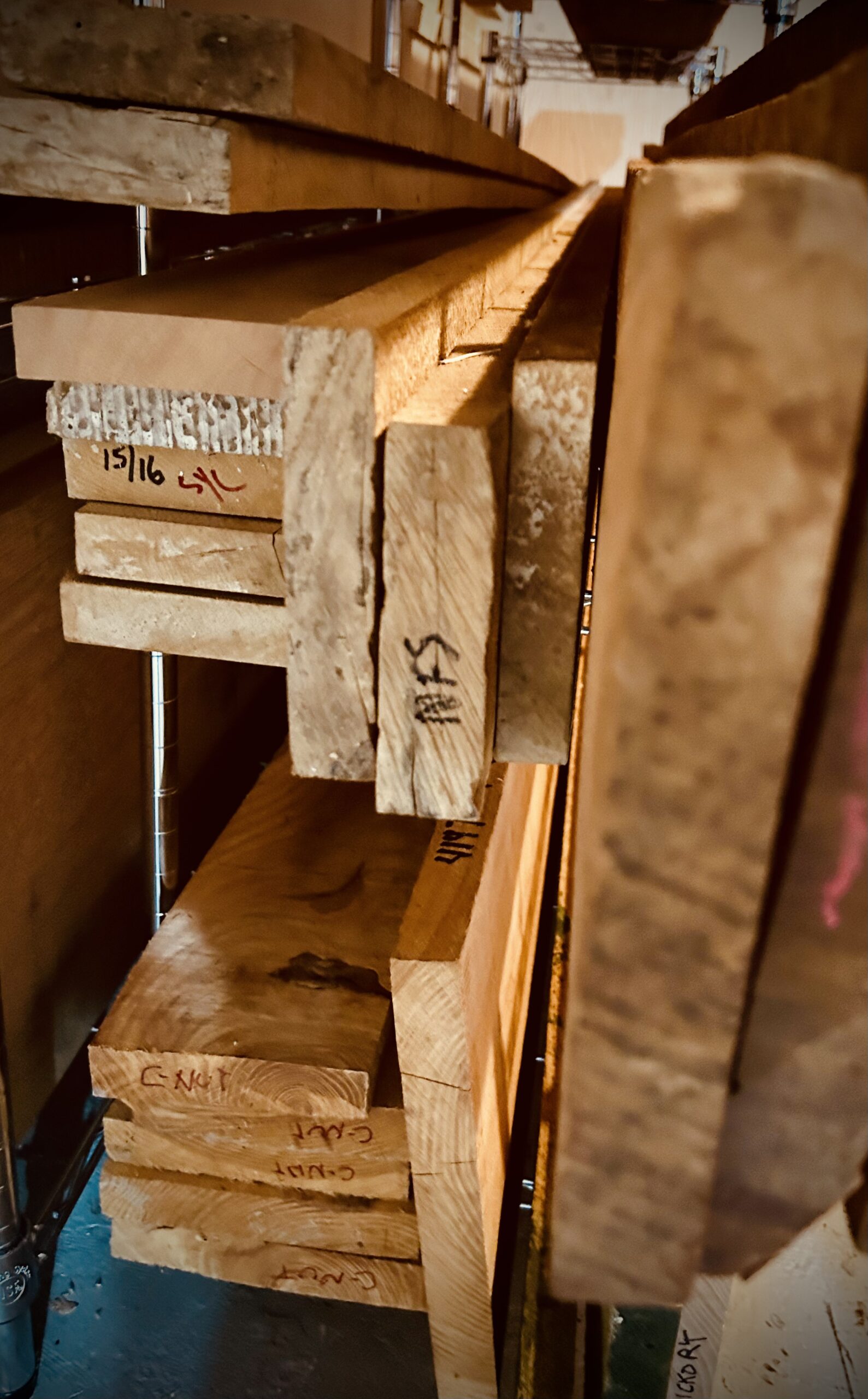
If you are building a table, cabinet, or something meant to last, the choice of where you buy your wood matters. Construction lumber, the 2x4s et al stacked at your local hardware store, is not the same as furniture-grade wood. Box stores serve a purpose, but when it comes to making furniture or custom pieces, they are limited in what they can offer. A sawmill or specialty store, by contrast, opens up possibilities that simply are not available in the big-box aisles. Plus, let’s be honest: buying lumber at a mill feels like stepping into a secret society of people who actually know what wood is supposed to look like before it gets shrink-wrapped.
Now, I understand this may not be a possibility for everyone. I think geography is a bit of destiny in this respect. If the closest local mill is too far away or not feasible for other reasons, there are some reputable ones that do a great job of online ordering and shipping, though your gonna pay for the shipping and in large quantities, that can add up fast. But, it is an option.
And yes, you can build stuff out of what they sell at the box stores. You’re just going to be pretty limited in options and get gouged on price.
Selection
At a box store, your options are narrow: red oak, maple, poplar and pine, usually in one thickness, all surfaced and dimensioned for convenience, is pretty much all I’ve ever seen. At a mill, the range is wider than the deep blue sea. You can find, depending on the place, dozens of domestic species like cherry, walnut, maple, ash, and get said boards in plain sawn, rift, or quartersawn varieties, plus large live-edge slabs. Mills often stock lumber in thicknesses up to 12/4, which can be resawn, shaped, or joined in ways you cannot achieve with the pre-dimensioned boards at a hardware store, which are typically going to be ¾” by whatever widths they are stocking. If you need 10-foot cherry boards for your tabletop, or a bookmatched set of walnut slabs for a desk, the mill is where you will find them. It’s like moving from the frozen food aisle to a farmer’s market and you suddenly realize how little choice you actually had before.
Cost
Price is another difference. At the box stores, wood from my experience is sold by the linear foot, which is expensive compared to buying by the board foot. A board foot measures volume: 12 inches by 12 inches by 1 inch thick equals one board foot. It is the standard way lumber is and has been priced at mills since time immemorial (or close to it, anyway), and it almost always comes out to be a smaller hit to the wallet. For example, a 1x6x6 piece of oak at a hardware store may cost as much as $25, while the same volume of oak from a sawmill could be less than half that, depending on species and grade and cut. Over the course of a large project, those savings add up quickly. You can buy nicer wood for the same money, or, let’s be real, blow the savings on another parallel clamp you probably didn’t need but convinced yourself you did by following the old adage.
Getting what you want and knowing where it came from
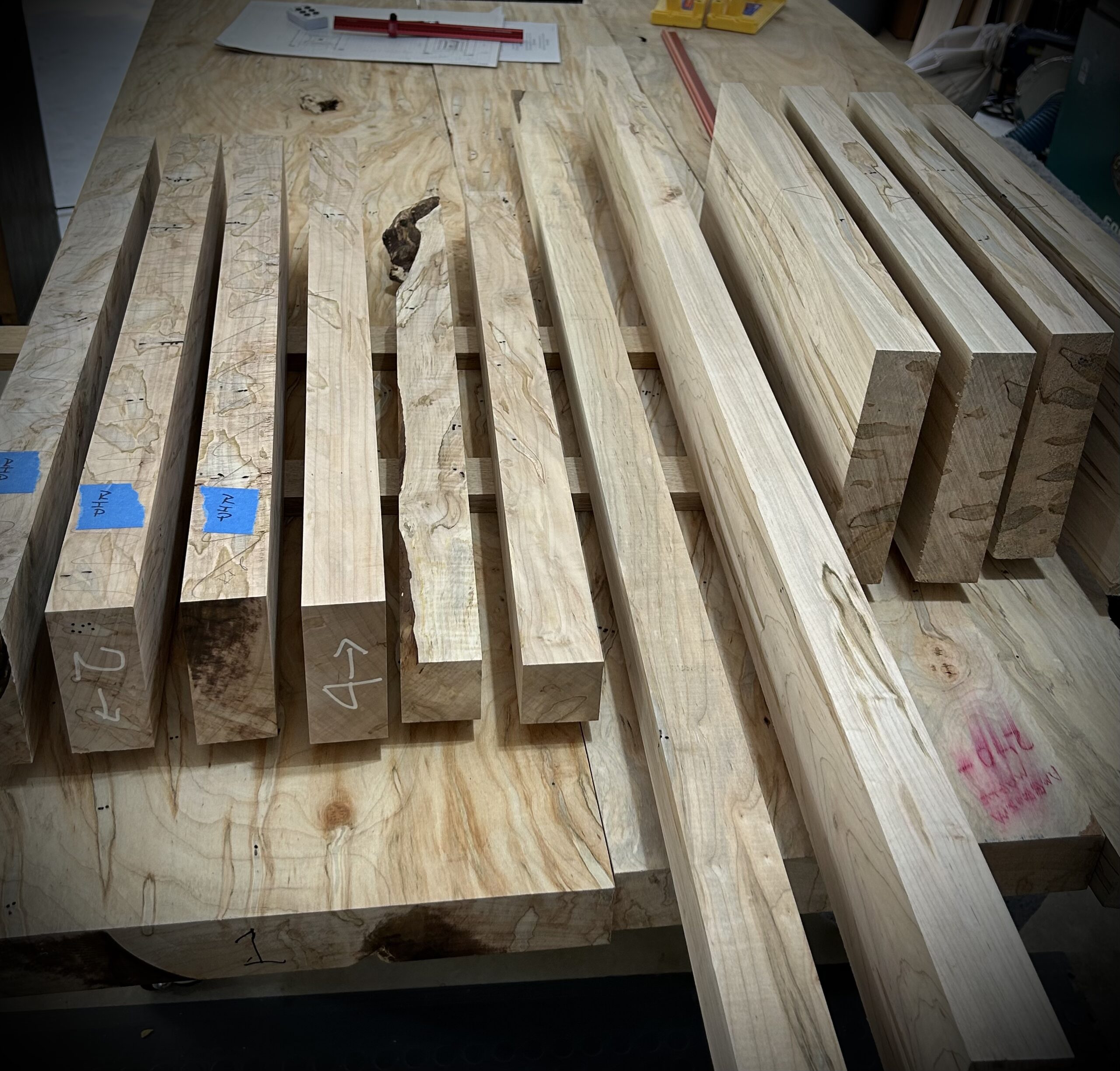
Beyond cost, mills give you more control over how the wood arrives in your shop. Get it completely in the rough, right off the saw with no other milling so you can do it all on your own, or get your stuff semi-milled from the shop 1 edge and 1 side, the whole thing, whatever you want if you do not have the equipment at home. You can also be reasonably certain of the wood’s origin as many mills harvest from local forests or suppliers. Knowing that your dining table came from a walnut tree cut 20 miles away adds meaning to the finished piece. Try asking the guy in the orange apron where that oak board came from and if it was harvested responsibly and see if you get more than a shrug.
Supporting local businesses
Purchasing directly from a local mill supports local tradespeople and small businesses. Instead of profits leaving your community through corporate chains, your money goes to operators who are invested in sustainable forestry and the woodworking craft. Keeping mills in business ensures continued access to quality materials for local crafty folks. Plus, you might get to shake hands with the very person who milled your lumber. That is a much more pleasing experience than scanning a barcode at the self-checkout any day.
Help with the goods
Not every woodworker has a jointer, planer, or wide-belt sander. Most mills will, for a small fee, prepare boards to your specifications. And even if you have a shop full of machines or full arsenal of bench planes, sometimes it makes sense to get this done to cut down on milling time in the shop, which is not insignificant on a larger project. Need something cut to a manageable length for transport? Need a slab flattened or an edge jointed? Mills can do it. This saves time and can allow you to focus on, for example the creative aspects of the build instead of wrestling 200 board feed of rough stock into shape, though there is something to be said about the process on many levels. You don’t have to prove yourself to the ghosts of 18th-century woodworkers or contemporary hand tool purists unless you want to do that, which of course, tip of the cap to you old chap. It’s okay to let the mill do some of the grunt work sometimes. You build things how you want to with whatever tools and processes you choose. In my book, simply setting about the task of transforming raw material into finished product goes a long way. Just make it well and make it right.
Learning and community
Sawmills are more than places with stacks of lumber waiting to be transacted. In my experience they are hubs of knowledge. Mill operators know how different species behave, which boards are best suited for certain projects, how to avoid hidden defects, how to get you some very specific materials for a project. You might meet other woodworkers while you are picking through stacks, trade stories, and walk away with new techniques or ideas. It is a quiet form of apprenticeship that happens naturally in these spaces. Sometimes the best woodworking tip you’ll ever get comes from the guy two stacks over muttering about grain direction as he pulls a splinter out of his hand.
I’ll give you a little anecdote about this. On a trip to my favorite local mill on a random weekday morning, I met a guy who was a wood sculptor that was there that morning looking for some stock for a project. Now, his name escapes me at present but I think his first name was David. What I am certain of is that during our talk, he told me he did some kind of work, or volunteering at the Wharton Esherick house. As it turns out, in my obliviousness at the time, I had no ideas that it was only a 10 minute drive from my house. And if you want to see some rather interesting, esoteric, and wild creations in wood, check it out some time.
I give this digression to emphasize the point. That kind of interaction and gathering of knowledge at a box store – I don’t see it happening.
The fun of it
Finally, there is the experience itself, which honestly is all you really need. Walking through the stacks, running your hands over boards, lifting one to catch the light across the grain – this is not something you get at a box store. The excitement of finding a piece that perfectly fits your vision, these moments make one’s woodworking personal. Choosing your own stock for a project is an essential task and skill of the overall craft of making things out of wood. For me its mandatory, but again, for some folks, it just might not be possible and that’s okay. It’s part treasure hunt, part meditation, and part workout, because let’s face it, moving 8 foot long, 12/4 white oak is the original CrossFit.
So, if you can, get your stuff from the local mill or specialty supplier. For all of the reasons above and many more.


Leave a Reply