
I have seen a few news stories recently about a lawsuit going on between the John Deere company and farmers/buyers of their machinery. The issue at the center of the suit is one of repairability. From what I gather, John Deere does/did not want farmers or other individuals who purchase their equipment to be able to repair said machinery on their own (or I gather through a third party of some sorts).
Now, I’m not sure all the gory details of the suit, or where that lawsuit stands at the time of writing this here collection of sentences, but… really, John Deere? What short sighted search for quarterly share-holder value decision-making CEO would propose, let alone, try to defend this approach in court against their customer base – one that they presumably want to buy more machinery from them in the future? Objection, your honor: asked and answered.
So, yeah. Not just a terrible business idea, a terrible idea no matter how you look at it. And I’ll tell you this, my fine furniture friends, if I need a new riding mower for the yard several years hence, what’s the chance John Deere is on that list, now?
Because this piece of news is timely, it makes for a good introduction to the idea when it comes to furniture and other things made out of deceased trees. I think, probably in most instances where it is possible, one ought to design and build their wooden creation so it can, if needed, due to unfortunate circumstance, age, or otherwise, be fixed if broken. And, perhaps, maybe not even fixed. Changed. It’s actually a broader concept, than repairability, I suppose, though that is important. It becomes more of an idea of adaptability, serviceability, or just good old maintenance of something that works great. (Heck, I drive a 2007 Honda Accord with a five speed manual transmission and no earthly intention of divesting, only repairing). Why? Because the wood objects we create are used by people, at different times and in different ways. Families change, domestic practices change, people move, people stay put but want…something a bit different. If you can in some way, make that a future possibility for the things you create, well, then, by Jove, your on to something.
Now, how could this play out in practical ways? Well, as I talked about in a previous post, one aspect could be how the piece is finished, making it more or less easy/possible to edit or revise that finish – either by oneself or through a competent third party specialist.
Another path would be in the construction methods used and the materials themselves. There are ways this can be done, for example, with the adhesives one uses in building piece of furniture. Some, like the ancient varieties that are derived from animal bits and bobs – you can undo those pretty well with just a little heat and water, if need be.
This might not be the best approach for everything, mind you. Let’s not get all dogmatic just because we can. For example, I’m not sure I would want a table top panel – say glued up from multiple boards, to need to be disassembled someday. That’s probably okay being what it is and how it is. But, for other kinds of things for which you may need to fix or replace a singular part that, due to the nature of the object could conceivably need replaced at some point, by all means, make that a possibility for the person or persons that may have that object in the future.
What I think the idea speaks to is a bit of being a steward of what your creating for the long haul, not just the first person to buy it and use it. Make it well, make it right, make it the best you possibly can, but if something needs to be fixed or someone wants to tweak it a bit down the road, allow for that potential.
In short, I’d say, don’t be a John Deere. I mean, if I sold you a table, and 20 years down the road, you needed the top to be refinished, or you decided you wanted to paint the base in some kind of color, and I told you, no sorry, gotta bring that back to the shop and lay down a premium for the privilege, how likely would you be to buy that table? Objection your honor: asked and answered.
So, while you may hear on occasion from someone something to the effect of, well, I didn’t really build this so that it would be around 200 years from now, and who cares, I’ll be dead anyway… I can’t get behind that idea, even for a hot second. Now, I cannot say for certain that everything I make is always going to be a cherished item. In fact, strike that. I can say for certain. However, that does nor should not influence one’s ability to design and build with the expectation that a piece will not be trashed or chopped up and burned because the thing was poorly made using crap materials. Furniture should outlive the ones making it. Full stop. To do otherwise is wasteful. Designing it so that future owners can care for it, repair it, or even alter it to their heart’s content seems fair and the right approach.
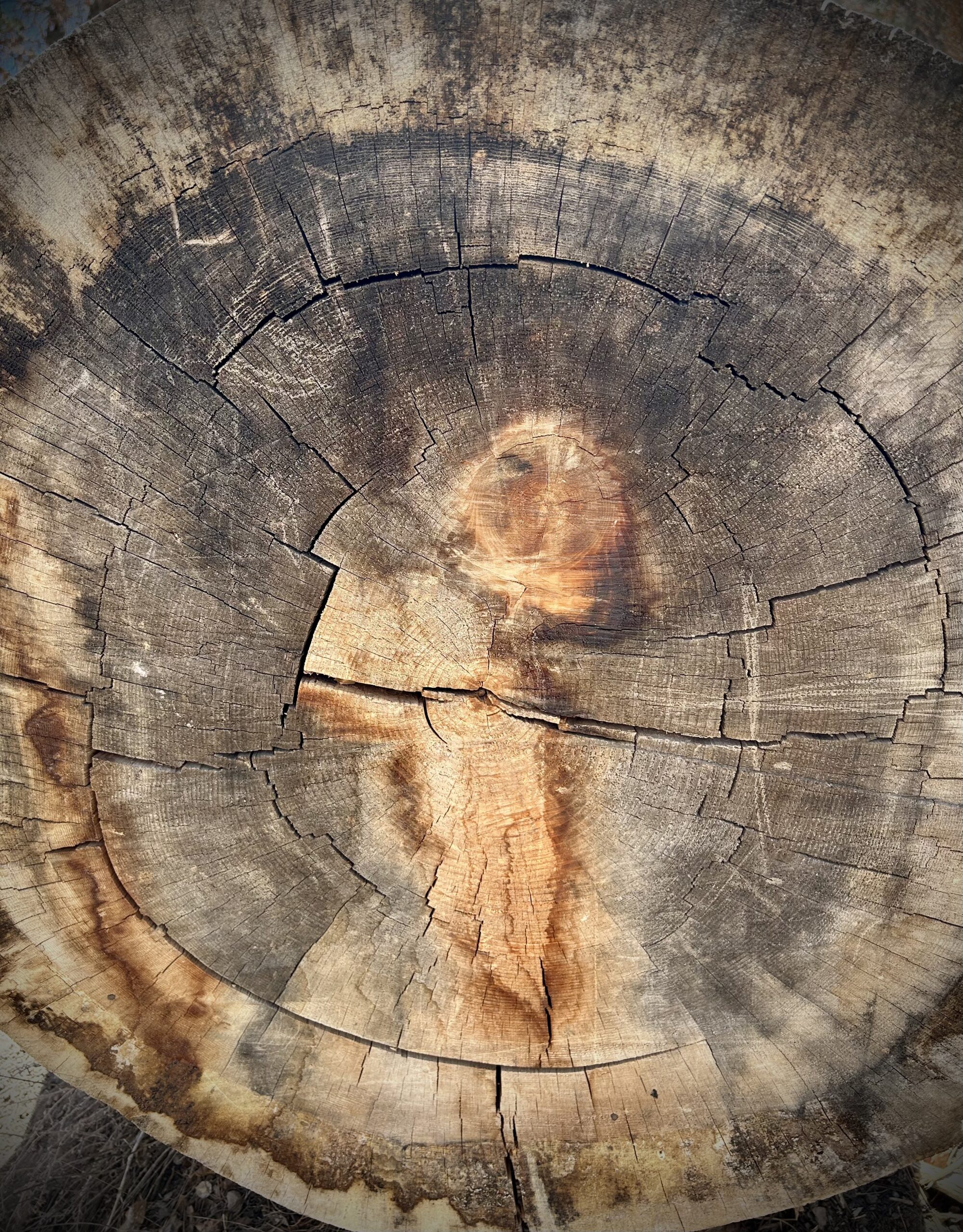
Note: The photo at the top of this post – that is the cross section of a large felled ponderosa pine in Bandolier National Monument in New Mexico, which is northwest of Santa Fe. We were there a couple years ago. I believe it came down in a previous fire in the area and was sawed up. Me and my daugher tried to count the rings. It was too big and too many. This area has preserved cliff dwellings of former indigenous inhabitants. Very cool.


Leave a Reply